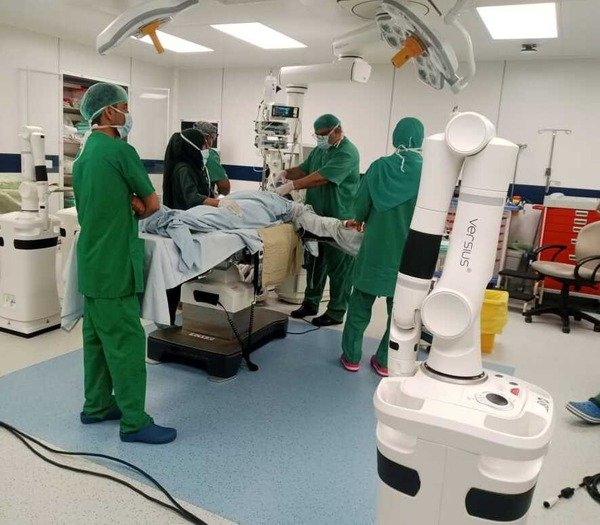
Furthermore, advancements are being made in the domain of liver surgeries, where robotic assistance is increasingly being sought. The ability of robots to navigate and operate in confined spaces with unmatched precision is a game changer, especially for intricate liver surgeries.
While Pakistan is still in the initial phases of integrating robotic surgery into its medical landscape, the early signs are promising. With trailblazers like Prof Dr. Rehana Aamer Khan leading the way, the future of robotic surgery in Pakistan looks both exciting and transformative. As the technology becomes more prevalent, it holds the potential to redefine surgical care in the nation.
Benefits of Robotic Surgery over Open surgery
Robotic surgery, as a facet of minimally invasive surgery, offers several advantages over traditional open surgical methods. Here are some of the key benefits:
- Precision and Control: Robotic systems offer surgeons enhanced dexterity, stability, and precision. They can filter out hand tremors and translate the surgeon's hand movements into precise movements of miniaturized instruments.
- Enhanced Visualization: The robotic systems often come with 3D high-definition vision systems that give surgeons a magnified view, which is particularly advantageous for identifying critical anatomy and delicate structures.
- Minimal Scarring: Since robotic surgery requires smaller incisions compared to traditional methods, the scars left post-surgery are minimal.
- Reduced Pain and Discomfort: Smaller incisions typically result in less pain after the surgery.
- Shorter Hospital Stay: Faster recovery often means that patients can leave the hospital sooner after a robotic surgery than after an open surgery.
- Quicker Recovery: Minimally invasive procedures generally allow patients to resume their normal activities faster than traditional surgery.
- Reduced Risk of Infection: Smaller incisions reduce the exposure of internal organs to possible external contaminants, thereby reducing the risk of post-operative infections.
- Less Blood Loss: Minimized incisions and increased precision often result in reduced blood loss and, consequently, a decreased need for blood transfusions.
- Ergonomics for the Surgeon: The design of robotic systems considers the comfort and ergonomics for surgeons, reducing their fatigue especially during lengthy procedures.
- Access to Difficult to Reach Areas: The flexibility and range of motion of robotic arms can surpass the human hand, allowing surgeons to operate in areas that are challenging to reach with traditional methods.
- Consistency: Robotic systems can ensure a higher level of consistency and repeatability in surgical procedures.
- Reduced Tissue Trauma: The precision of robotic instruments means there's typically less trauma to tissues and organs, which can promote faster healing.
While robotic surgery offers numerous advantages, it's essential to note that it might not be suitable for every patient or every type of procedure. The decision to use robotic assistance should be made after a thorough consultation between the patient and the surgeon, taking into account the specifics of the individual case.
Comparison of Robotic Surgery and Laparoscopic surgery
While both robotic and laparoscopic surgeries are forms of minimally invasive surgery, robotic surgery brings several enhancements and advantages over traditional laparoscopic methods. Here are some of the distinct benefits of robotic surgery compared to laparoscopic surgery:
- Enhanced Visualization: Robotic systems typically offer 3D high-definition visualization, providing surgeons with a magnified and more detailed view of the surgical field. In contrast, laparoscopic surgery often uses 2D imaging.
- Greater Precision and Control: Robotic arms have a broader range of motion than human wrists, allowing for more intricate movements. They can also filter out hand tremors, translating the surgeon's hand movements into precise, steady instrument maneuvers.
- Ergonomics for the Surgeon: The surgeon operates from a seated position at a console, which can be more comfortable than the standing position required in laparoscopic surgery. This ergonomic design reduces surgeon fatigue, especially during long procedures.
- Easier Complex Procedures: Some surgeries that might be challenging or even impossible with laparoscopy can be more easily accomplished with robotic assistance due to the enhanced precision and control.
- Better Access to Tight Spaces: The flexibility and articulation of robotic instruments can be superior to straight-stick laparoscopic tools, enabling better access to and manipulation within tight or challenging anatomical spaces.
- Reduced Learning Curve: For some procedures, the learning curve for robotic surgery may be less steep than for laparoscopic methods, allowing surgeons to achieve proficiency more quickly.
- Scalability of Movements: Robotic systems can scale down the surgeon's hand movements. For instance, a 2-inch hand movement by the surgeon can be translated into a 0.2-inch movement by the robot, allowing for ultra-fine control.
- Fewer and Smaller Incisions: In certain procedures, robotic surgery may require fewer or smaller incisions than laparoscopic surgery.
It's important to note that while robotic surgery offers these advantages, it may also come with higher costs and requires specific training for surgeons. Furthermore, not every surgical procedure or patient will benefit from robotic over laparoscopic surgery. As always, the choice between the two should be based on individual patient needs, the nature of the procedure, and the surgeon's expertise.
Why Robotic Surgery is not popular in Pakistan?
The adoption of robotic surgery in Pakistan has been slower compared to some other countries, and several factors contribute to its limited popularity:
- High Costs: One of the most significant barriers is the prohibitive cost of acquiring and maintaining robotic surgical systems. Given Pakistan's economic constraints and budgetary limitations in healthcare, most hospitals find it challenging to invest in such expensive technology.
- Lack of Infrastructure: Beyond just the cost of the robotic system itself, hospitals require the necessary infrastructure, such as reliable power sources, dedicated operating rooms, and specialized equipment, to support robotic surgery.
- Limited Training Opportunities: There are not many training programs available in Pakistan for surgeons to gain expertise in robotic surgery. The limited pool of trained surgeons can restrict the availability and spread of the technology.
- Cultural and Perception Barriers: Patients and even some medical professionals are skeptical or hesitant about robotic surgery due to cultural beliefs, lack of awareness, or misconceptions about the technology.
- Dependency on Imports: Robotic surgical systems and their components are largely imported, making Pakistan dependent on foreign suppliers. Fluctuating currency rates, import duties, and other related challenges are affecting the cost and availability.
- Regulatory Hurdles: The medical regulatory landscape for such advanced surgical methods is in developing phase in Pakistan that leads to uncertainties regarding standardization, accreditation, and other protocols.
- Economic Disparities: The high cost associated with robotic surgery is making robotic surgery accessible primarily to the affluent sections of society, thereby making it less prevalent in the broader population.
- Limited Awareness: There may be limited awareness among the general population about the advantages and possibilities of robotic surgery that leads to lower demand.
- Priority of Basic Healthcare Needs: Given the myriad of basic healthcare challenges faced by Pakistan, from infectious diseases to maternal care, the focus is on addressing these primary concerns before investing heavily in advanced surgical methods.
- Reliability Concerns: Concerns about power outages, system malfunctions, and other technical issues makes many people hesitant to rely on robotic systems for critical surgeries.
While these factors have limited the popularity of robotic surgery in Pakistan, it's worth noting that as technology becomes more affordable, training programs expand, and awareness grows, the landscape might change, making robotic surgery more accessible and common in the country.
Robotic Surgery in Pakistan Kidney and Liver Transplant Institute
The Pakistan Kidney and Liver Institute (PKLI) has taken a monumental step forward in the medical realm by establishing the Center of Excellence for Robotic Surgery in Lahore Pakistan. This state of the art facility has not only positioned Pakistan on the global map for advanced surgical interventions but has also provided its citizens access to world class healthcare services within the country. At the forefront of this evolution is the availability of state of the art robots that have revolutionized the surgical domain in Pakistan. The introduction of such high caliber technology in Pakistan underscores PKLI's commitment to uplifting the standard of healthcare and bringing it at par with international benchmarks.
One of the significant areas where this robotic expertise is being harnessed extensively is gynecology. The center has successfully performed a myriad of gynecological surgeries, showcasing its vast capabilities and the expertise of its medical staff. Prof Dr Rehana Aamer Khan is leading the team of gynecologist for advance surgical procedures with robotic system in PKLI. Among the surgeries being offered, myomectomy and hysterectomy are notable. Myomectomy, a procedure to remove uterine fibroids, and hysterectomy, the surgical removal of the uterus, are now being performed with enhanced precision, leading to quicker recovery times and reduced post-operative complications. Furthermore, the treatment of ovarian cancer, a leading gynecological malignancy, has witnessed a paradigm shift at PKLI's Center of Excellence in Lahore. Robotic surgery allows for meticulous tumor removal and lymph node dissection, offering patients a better prognosis. Additionally, procedures like pelvic prolapse repair, which addresses the bulging of one or more pelvic organs into the vagina, and tubal cannulation, a procedure to clear blockages in the fallopian tubes, are also being adeptly managed with the aid of robots.
PKLI's establishment of this center is a testament to Pakistan's strides in modern medicine. By integrating advanced robotic technology with the skills of dedicated professionals, the Center of Excellence for Robotic Surgery is setting new standards and offering hope to countless patients in need of sophisticated surgical care in Lahore Pakistan.
Cost of Robotic Surgery in Pakistan
The cost of robotic surgery in Pakistan varies significantly based on the specific procedure and the unique conditions and needs of each patient. Being the zenith of surgical technology globally, robotic surgery integrates advanced medical robots, which come with a steep price tag. Consequently, the operational costs associated with these sophisticated machines translate to higher charges for the procedure. While the benefits of robotic surgery are manifold, the investment in the technology undeniably contributes to its elevated cost. As with any medical procedure, the intricacies of the individual case can influence the overall expenses incurred. You can contact on help line for cost of any specific procedure
Robotic surgery in Pakistan stands as a testament to the nation's dedication to embracing cutting edge medical advancements and bridging the technological gap with global healthcare standards. This remarkable progress owes much to the pioneering surgeons who have relentlessly championed the cause. Among them, Prof Dr. Rehana Aamer Khan shines as an exemplary figure, leading the charge in the realm of gynecological robotic surgeries in Lahore Pakistan. Her remarkable expertise and unwavering commitment have played a pivotal role in successfully treating complex cases with precision, efficiency, and minimal invasiveness. With stalwarts like her at the helm, Pakistan is not only paving the way for modern surgical methodologies but also instilling hope and trust in patients seeking advanced care. The journey of robotic surgery in the country is still in its nascent stages and it signifies a promising future. It is a beacon of progress, driven by the expertise and determination of professionals like Prof Dr. Rehana Aamer Khan. As more surgeons join this transformative movement and as greater investments are made in technology and training, one can envisage a future where robotic surgery becomes a mainstay in Pakistan's medical landscape.